Weekend of Coaching in Newport RI

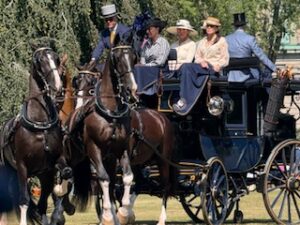
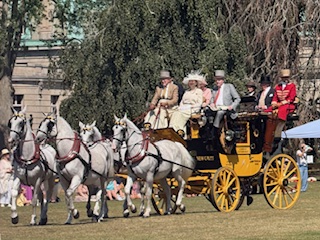
Last year, I spent another summer in Newport, Rhode Island and enjoyed a new adventure. Duby and I attended the “Golden Age of Coaching” driving exhibition of authentic 19th century coaches on the grounds in front of  the Elms Mansion. The matched horses are magnificent and highly trained, the coaches opulent and the expert drivers are skilled at controlling their team of four horses using the “4 in one hand” reins technique.

All seating is outside, with the driver, known as a “whip,” sitting in a slightly elevated right front seat, and the whip’s wife or female relative taking up the “box seat” on the left.
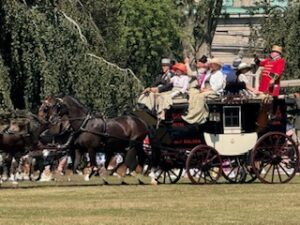
The colorful and historic coaches parade through the streets of Newport and the grounds of the Newport Mansions, drawing huge audiences, during the “Weekend of Coaching”.

The tradition of coaching grew out of the 18th and 19th century mail runs in England, which later made their way across the Atlantic Ocean to the U.S. Eventually, the horse-drawn mail coaches were replaced by railroads, but nostalgia led to the development of coaching as a sport.
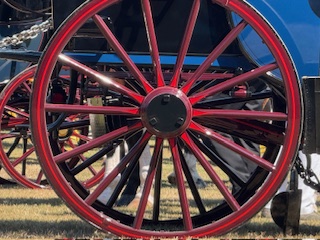
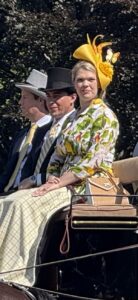
The New York Coaching Club, formed in the latter part of the 19th century, became part of the social fabric summers in Newport. The Wetmores, the Bells, the Vanderbilts and the Belmonts were all active members, bringing their coaches together to go to the races, polo games and the Casino.

This event, hosted by The Preservation Society of Newport County, is held every three years.
 

Nature’s Worst Brings Out Humanity’s Best

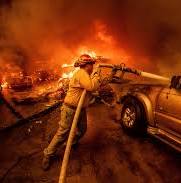
The wildfires in southern California blazed out of control fanned by ferocious Santa Ana winds that often hit 80 mph over extremely dry terrain. Embers the size of your fist blew for long distances further igniting the inferno. On January 7, 2025, the decimation of Pacific Palisades and Altadena (Eaton Fire) started and quicky decimated more than 15,000 structures and scorched 40,000 acres. It is the worst natural disaster in California’s history.

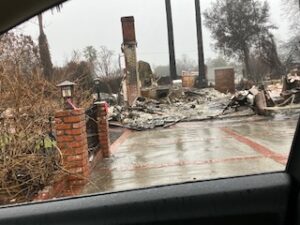
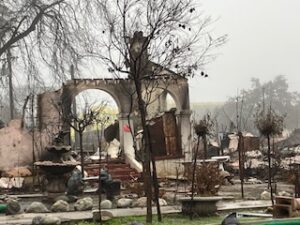
 

This is an example of nature not being wondrous but horribly destructive. Many of my friends lost everything in these fires and are grateful to have escaped with their lives and their pets.

Firefighters and the National Guards worked 12-hour shifts. The Rose Bowl was quickly converted in a staging area for the Eaton fire and housed 4,000 first responders.  Massive trailers and tents provided sleeping quarters, shower facilities, a laundry, a medical facility and physical therapy trailer. Two kitchens served thousands of meals a day.

And yet, while the fires blazed and with thousands of families displaced, Los Angeles responded with a amazing generosity showing community spirit and strength.

Friends and family took in those displaced. Air BnB, Hilton and other hotels offered free housing to fire victims. Animal shelters and stables were opened for pets, horses and other displaced animals. Laundromats offered firefighters free services. Restaurants and coffee shops served free food to those who lost their homes. The L.A. Pizza alliance formed in Chinatown to deliver thousands of pizzas to first responders, displaced individuals and volunteer workers. Bookstores opened their doors for coffee and a safe place for people to gather and share their stories.

Countless local non-profits organized donation centers and were over-whelmed with donations of clothing, blankets, supplies, pet food and water.

People and corporations from around the world donated to thousands of recipients such as United Way, Red Cross, Salvation Army and Habitat for Humanity and go fund me accounts.

Even as we grieve, this generosity fosters hope and strength as we navigate the long road ahead to recovery. This spirit of community, supporting people who lost so much,  is a demonstration of humanity’s best.

Hydrangeas and Elephants

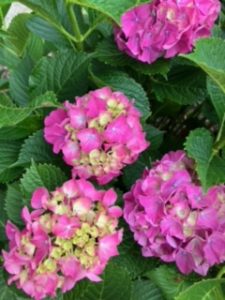
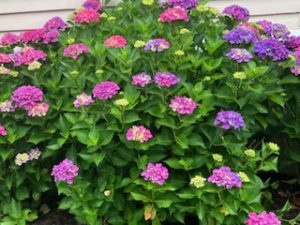
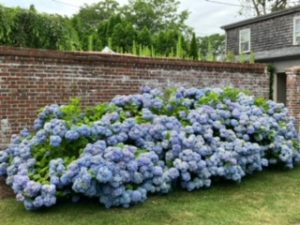
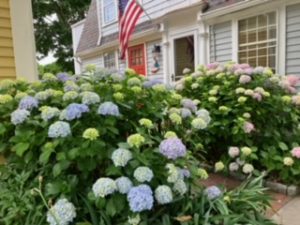
Hydrangea, Newport, RI, 2024

When I was a young girl, my family would spend several weeks in the summer at my Grandmother Grace’s farm in Knoxville, Iowa. I have such pleasant memories of those summers.

Grandma worked a 60-acre farm alone since my grandfather had died before I was born. After we’d arrive, she’d pick fixings for a salad from her garden and make her famous chicken and homemade noodles. After dinner, my brothers and I would run outside and catch lightening bugs in a jar and watch them illuminate over and over again.

On Sundays, we’d go to town after church and visit with one relative or another and that was my first introduction to hydrangeas. My parents and the relatives would linger for hours drinking coffee and smoking cigarettes and reminiscing. Soon, I’d be bored and sit on the large covered front porch reading and see abundant blue, pink and purple extravagant blooms on hydrangeas shrubs lining the front of neighbors’ houses up and down the street. That image of these old-fashioned flowers is forever imprinted in my brain.

For years, I tried to grow hydrangeas in my front yard, but the sun and weather in Glendale were not conducive to them so I finally gave up. When I came to Rhode Island this summer, I was amazed by how many blossoming hydrangeas bushes were everywhere. This year due to mild spring weather with no late frost, the bushes are loaded with colorful blooms at literally every third to fourth house block. It’s hydrangea heaven!
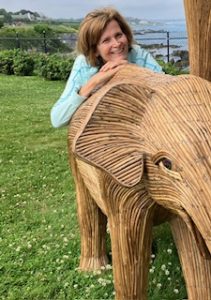
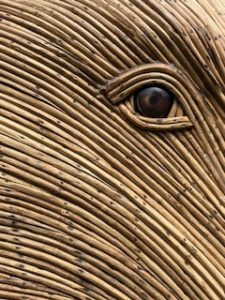
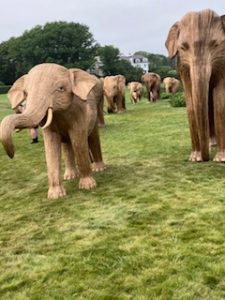
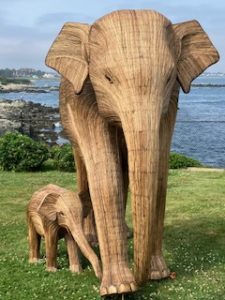
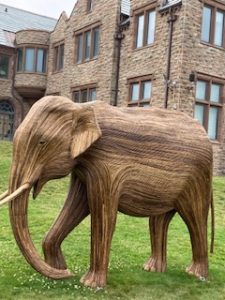
Now … on to the elephants. Who thought you could view a herd of 100 life-sized Asian elephants on Cliff Walk in Newport, Rhode Island? “The Great Elephant Migration” is a global fundraising project and public art exhibit to inspire humans to share space with wildlife. Two hundred Indian indigenous artisans crafted these elephants from Lantana camara (one of the world’s most invasive weeds) and they are now featured at the Rough Point Mansion, the ocean-side former residence of Doris Duke; the Breaker’s Mansion; and Salve Regina University.

After the exhibition closes in Newport in early September, the elephant herd will travel to New York City, Miami, Blackfeet Nation, Montana and Los Angeles.


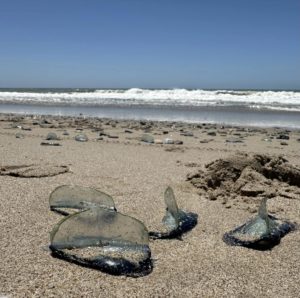
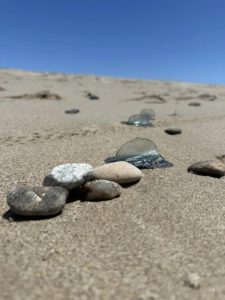
By-the-Wind Sailors Wash Up On Hollywood Beach in Oxnard

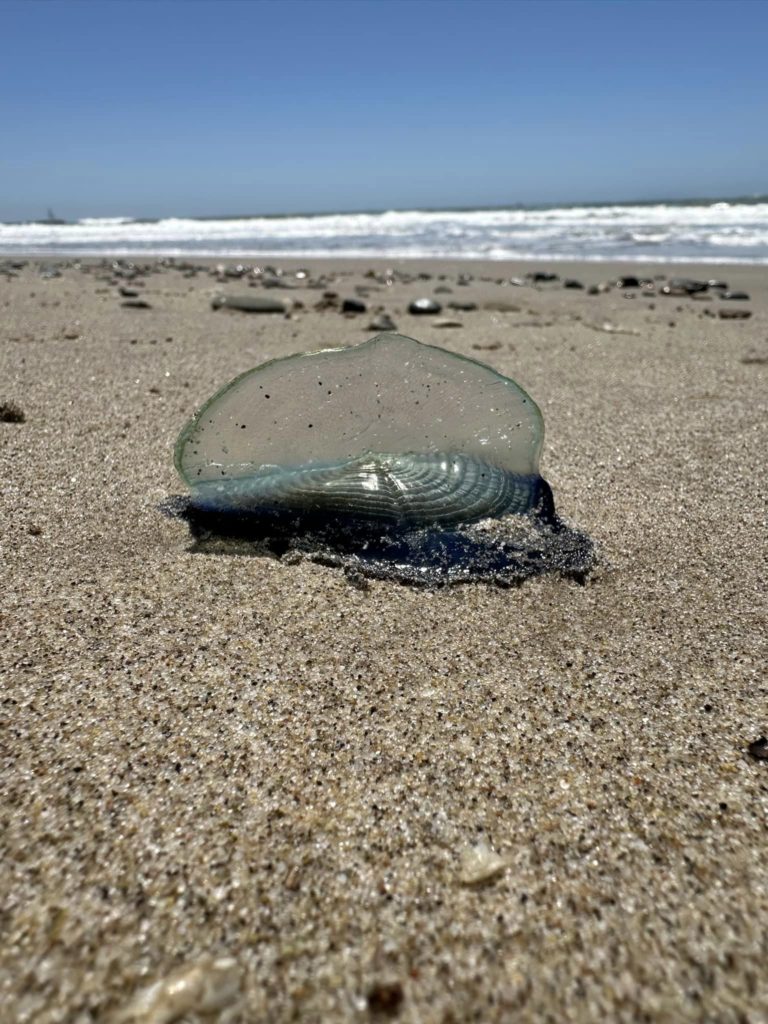
By-the-Wind Sailors, Oxnard, California, 2024. Loren Lieb

Blue jellyfish-like blobs known as by-the-wind sailors, or Velella velella, continue to wash ashore by the millions along Southern California’s coast. While it might look like a massive die-off or another catastrophic event, experts say it is natural and normal and colonies of them have washed up along our coastline for years.

By-the-wind sailors are a type of hydrozoa that feed primarily on plankton and closely resemble the Portuguese man o’ war. One of their nicknames is “little sail” since they have a small, stiff sail that catches the wind and allows them to travel great distances across the world’s oceans.

They wash up in large numbers because they’re drifting in the wind and go wherever it takes them … and, right now, that’s the California coast.

The millions that have washed ashore in California recently will either rot away or be pulled back into the ocean by the tide. That’s nature doing “its thing”.

My friends Alan and Loren were on Hollywood Beach in Oxnard and snapped some photos of the palm-sized sailors and posted them on Facebook. They say, “They’re a beautiful inky purple-blue but it’s hard to capture their true colorful iridescence in photographs”.

If you’re lucky enough to see washed up colonies, look but don’t touch and keep pets away too. Velella feed by stinging plankton with barb-tipped cells contained within their tentacles. The venom is considered harmless to human beings, but beachcombers are cautioned not to touch any jelly-like animals found on shore, as some may react more strongly to the venom than others.
If you get a chance, walk our local beaches and maybe you can enjoy viewing this natural phenomenon while it lasts.


The Pasadena Casting Club

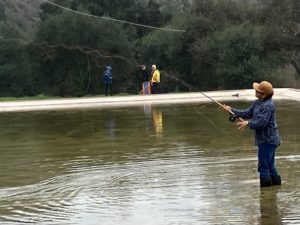
Casting Practice at Pasadena Casting Club,
Pasadena, California, 2024

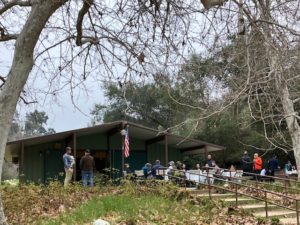
Last Sunday, I went with several members of the Pasadena Village to the Pancake Breakfast and Open House at the Pasadena Casting Club. It’s located in the lush Lower Arroyo Seco, Spanish for “dry gulch”. It is a stream course canyon that begins in the San Gabriel mountains, runs the length of Pasadena  and joins the LA River south of here.

But back to the Pasadena Casting Club. First of all, the breakfast was great…scrambled eggs, pancakes and bacon all prepared outside by club members and served in the clubhouse. Lots of OJ and coffee. We were welcomed by several members, including several women fly fishing enthusiasts.

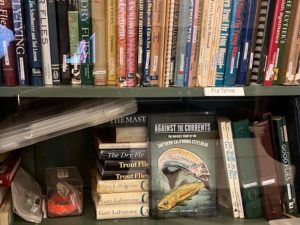
I was impressed by the large library of books on fishing in the clubhouse. Rods were available, free of charge, for visitors who want to practice casting whether they’re members or not. Some of the club members have been internationally recognized for contributions spanning decades and plaques attesting to these awards are scattered on all the walls.

The Pasadena Casting Club was founded in 1947. The casting pool is one of only three in the State. General meetings are held the second Thursday of the month in the evening and include “fish stories” and a program given by a guest expert on a current fly fishing topic. The club organizes a several of fishing trips each year, which include informal day trips as well as professionally guided out-of-state trips. Details can be found at www.pasadenacastingclub.org.

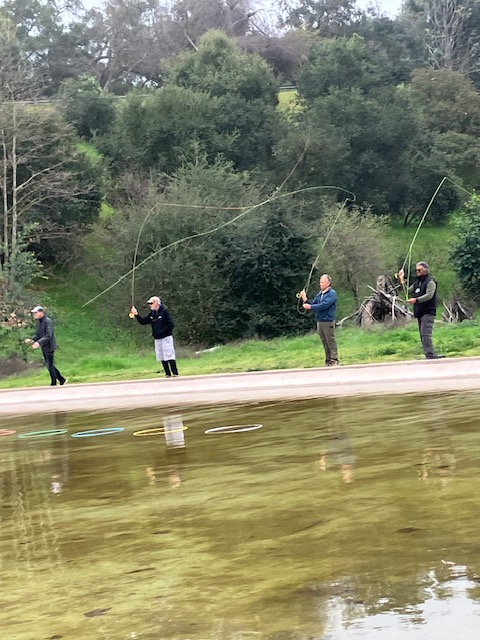
After breakfast, we went out to the casting pond and watched men practice their fly casting. They would cast over and over again. The line responding to their whippy actions like a well-rehearsed dance partner.

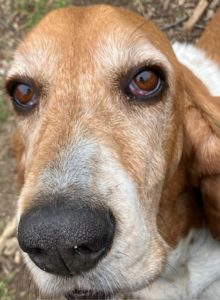
Daisy, Pasadena Csting Cclub

And I fell in love with Daisy, the Basset Hound, who was patiently waiting for her owner to take off his wading boots and give her some attention. In the meantime, I tried to keep her occupied. Every time I left, she starts to bark so I made several return trips.

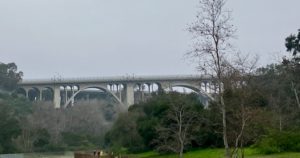
I can’t believe I’ve never been to the Lower Arroyo before. The area was bustling with people and lots of dogs seeking a release from indoors after many days of rain. It’s beautiful and has an archery range, horseback riding and hiking trails that run along the LA River. The view of Pasadena’s Colorado Street’s “Suicide Bridge” from the parking lot is impressive.

The day was a hit — learning about fly fishing and also discovering a gem of a park that I’ll be back to soon!