All posts by Susan James Carr

Mermaids Sighted in Solana Beach

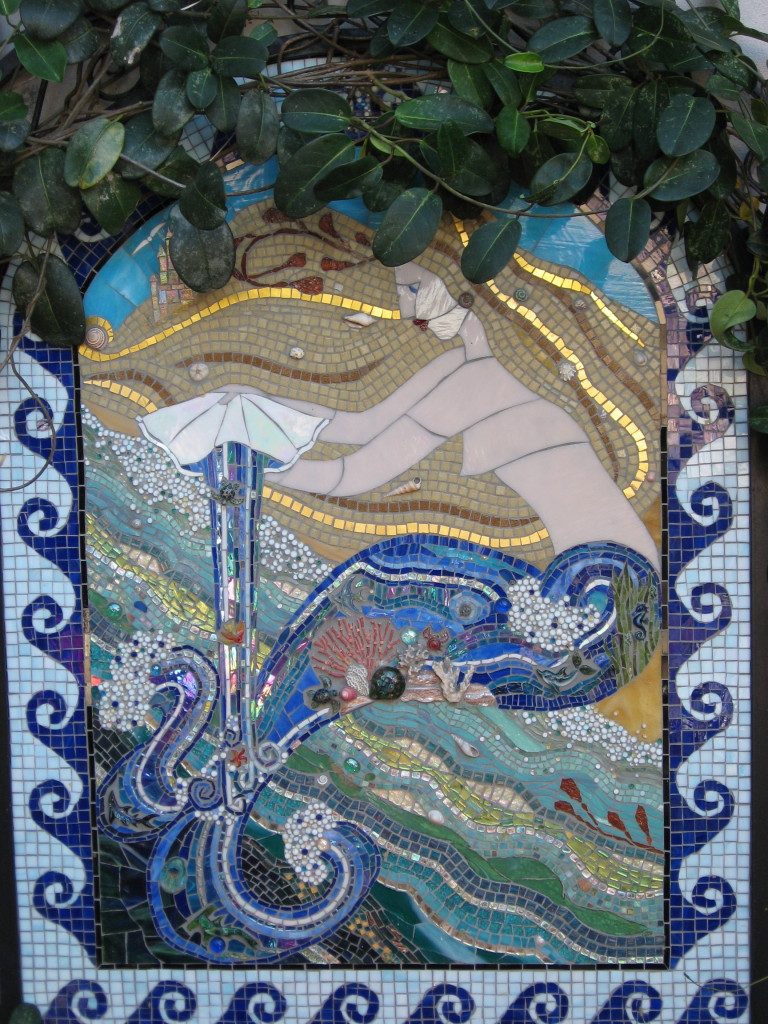
Mermaid's Delight, Mermaid Cottage, Solana Beach, California

Mermaid’s Delight, Mermaid Cottage, Solana Beach, California

Mermaids encircled me this weekend and I didn’t even have a toe in the ocean. The mermaid-inspired cottage we rented in Solana Beach was awash in sleek, green-finned mermaids — at the front door, embedded in the bathroom tiles, adorning the walls and the pièce de résistance — a sparkling 5-foot mermaid mosaic in blues and greens that illuminated our private patio.

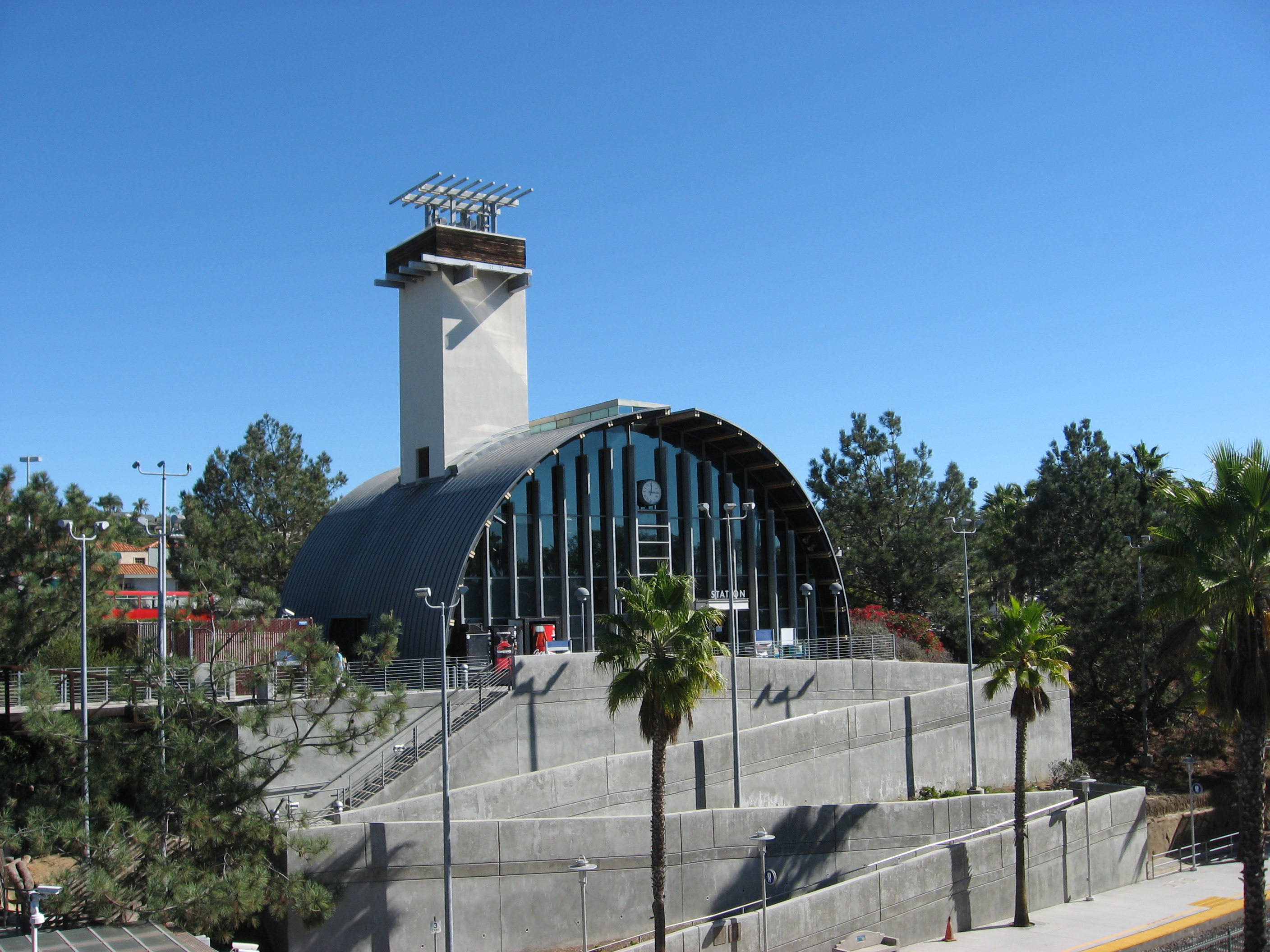
Solana Beach is nestled along the northern coast of San Diego County and a 30- minute drive from downtown San Diego. After a relaxing 2½-hour ride on Amtrak’s Pacific Surfliner, Jim and I arrived at Solana Beach’s Quonset hut-inspired train station.

Solana Beach is a favorite destination of ours. Small and inviting with lovely beaches, shops, restaurants, and nearby hiking. The Cedros design district has abundant art galleries, import and antique stores and cafes. Leaping Lotus, one of my favorites, has 21,000 square feet of shopping pleasure. Beautiful, fun, quirky and unique gifts, many created by local artists, always tempt me.

Many stores carry decorative items featuring the mythical oceanic half-female, half-fish mermaid. These beautiful, seductive maidens with their streaming auburn tresses have mystified seafarers for thousands of years and inspired myths, stories, movies and even an annual Mermaid Parade in Coney Island. Hans Christian Andersen’s Little Mermaid is perhaps the best know mermaid of all time, but who can forget Daryl Hannah and Tom Hanks in the 1980’s romantic comedy Splash?

In 1493, Christopher Columbus sighted three mermaids near what is now the Dominican Republic. He wrote they “came quite high out of the water but were not as pretty as they are depicted, for somehow in the face they look like men.” English adventurer John Smith described a mermaid he saw off Newfoundland in 1614, “her long green hair imparted to her an original character that was by no means unattractive.”

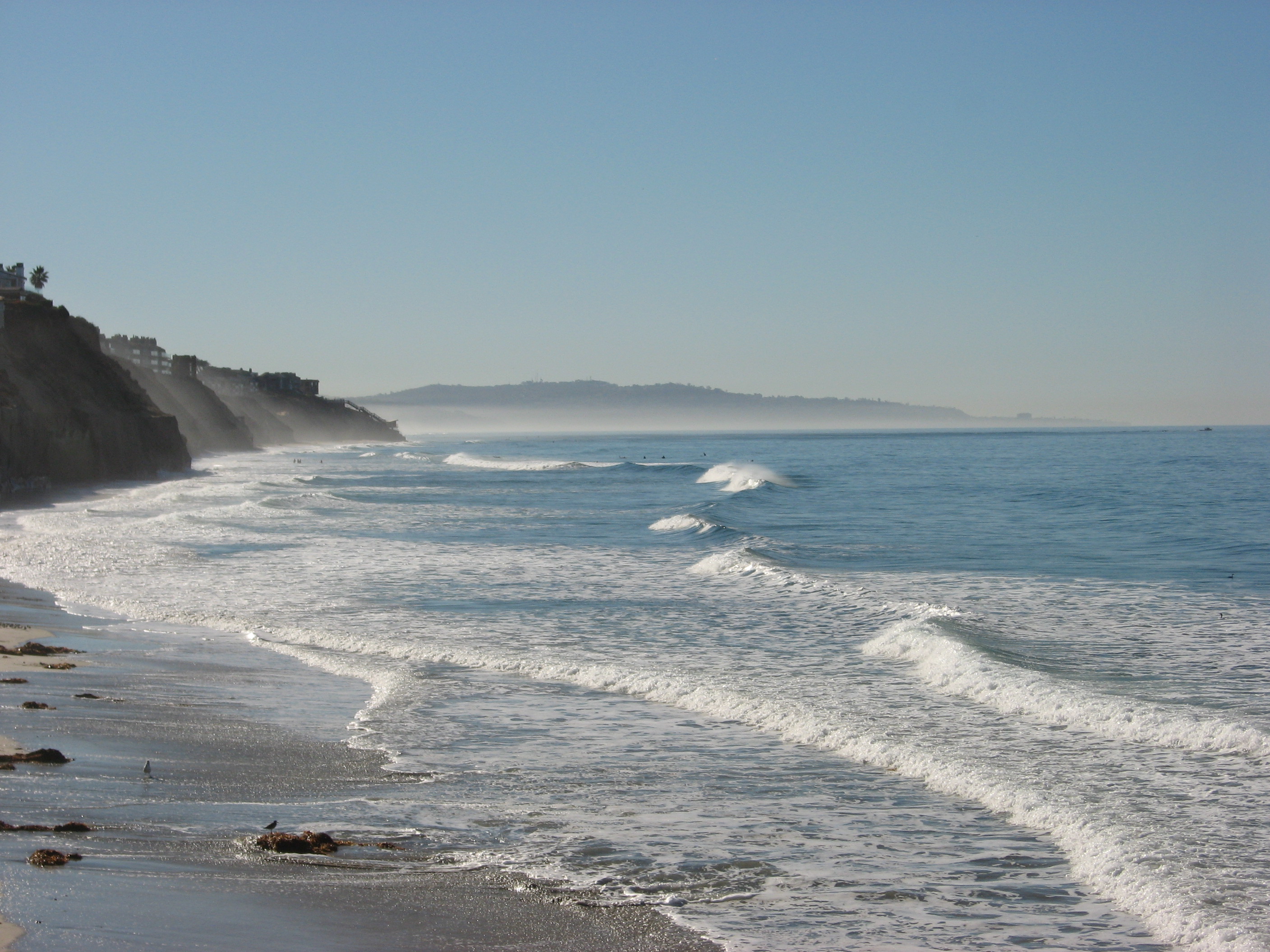
Mermaids, manatee, doppelganger, who knows? The mermaid spell has endured across space and time and clearly lingers in Solana Beach where surfers, paddle boarders, and families enjoyed the unseasonably warm November day.

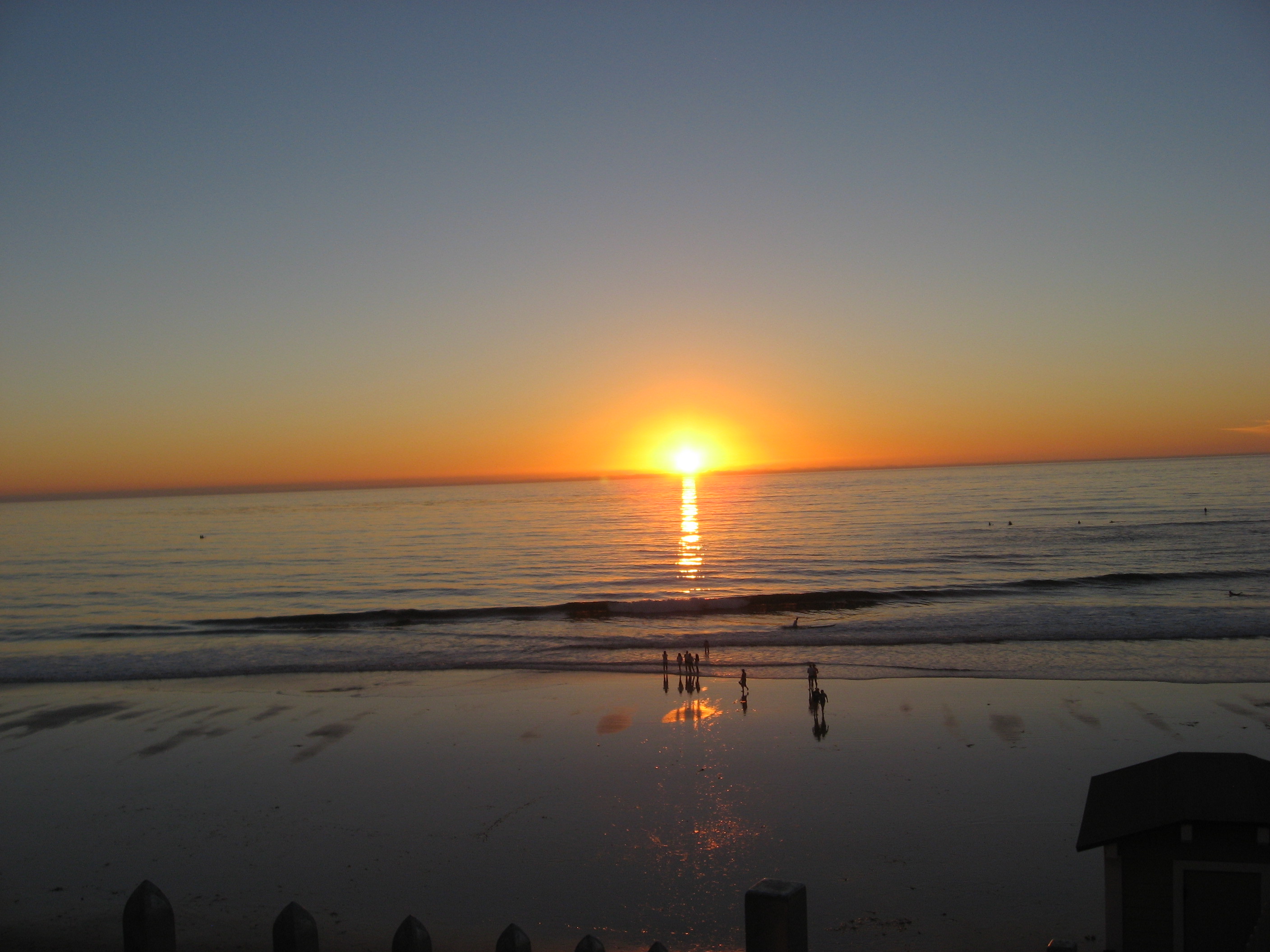
On my last evening there, I walked to Tide Beach to watch the sunset. As the sun kissed the sea good night, I wondered if the fleeting green flash I saw was the shimmering tail of a lost mermaid as she dove down to the idyllic oceanic floor. I don’t know for sure… but I’d like to think so.
fletchercoveamtraksolanaTideparksunset

El Matador Beach

El Matador Beach, Malibu, California

El Matador Beach, Malibu, California

Sometimes you find out information in the most unusual way. At a Dodger game a few years back, the votes of fans’ favorite beaches flashed on the scoreboard. I don’t remember what the second and third favorites were but El Matador Beach scored a home run on the video screen. El Matador? I’d never heard of this beach. But now I had to visit it

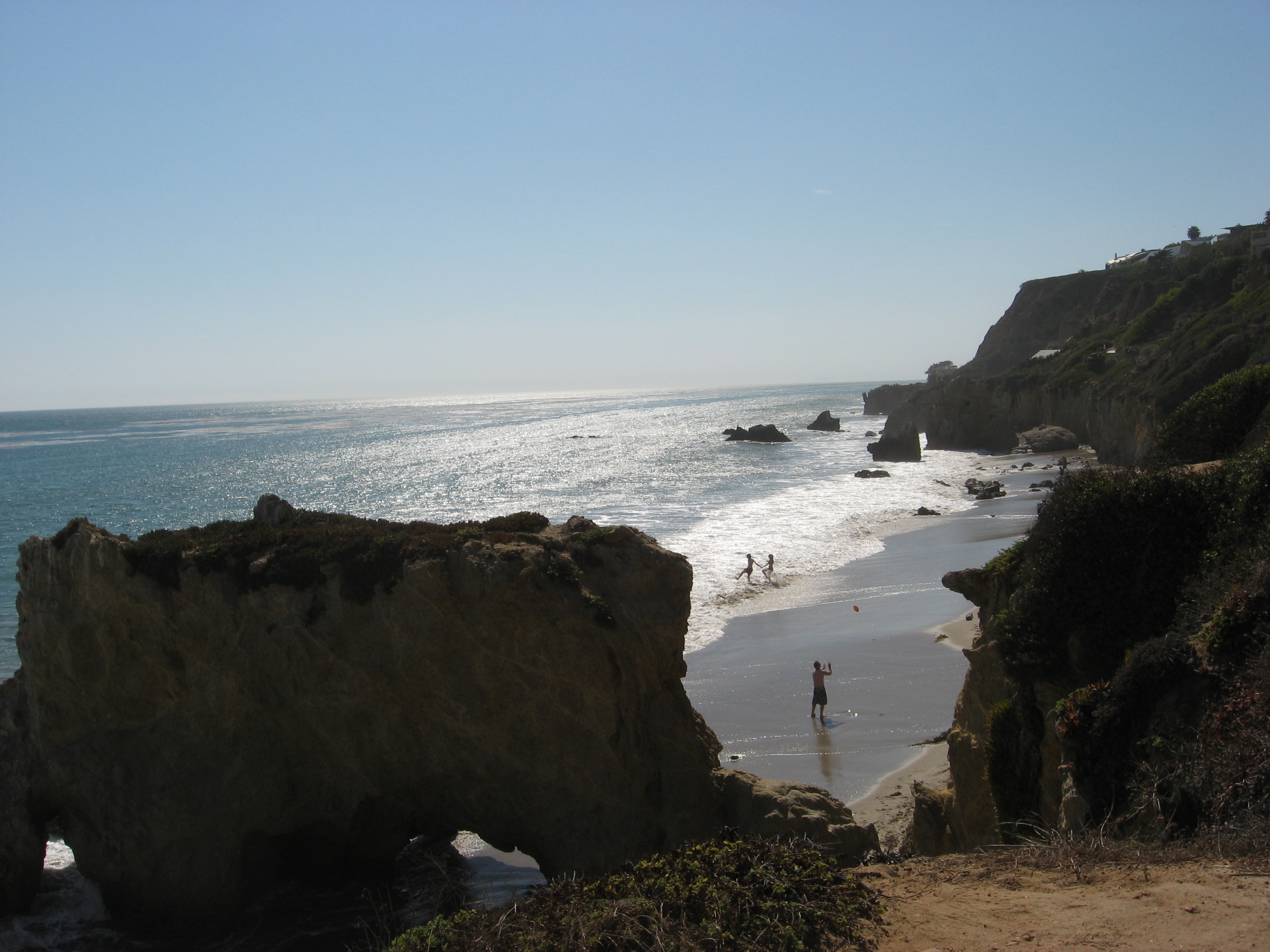
Jim, my nephew Chris and I drove to the west end of Malibu and found El Matador Beach between Leo Carrillo and Point Dume State Beaches. We were lucky enough to nab a parking place at the top of the bluff. One look down and we knew Dodger fans really did know beach beauty.  Below the rocky cliffs, a protected pocket beach awaited complete with sea caves, coves, rugged boulders and kelp-filled waters.

Walking down the steep trail, we watched a crew film a young blond woman in a white bathing suit and black gladiator sandals posing with a man with six-pack abs.  The models looked bored between takes but snapped into a romantic embrace for several retakes.

It was a perfect beach day. “El Mat” wasn’t very crowded and we enjoyed our own serene paradise, interrupted occasionally by a wayward Smashball or Frisbee sailing by. The beach was sheltered and pristine and I loved the feeling of solitude surrounded by rugged cliffs, boulders and monolith rocks spiraling skyward.

Malibu was once inhabited by The Chumash Native Americans who named it “humaliwo” meaning “where the surf sounds loudly.” And indeed, the surf did roar at El Matador Beach on this southern California endless summer day. The water was cold, invigorating and as deep blue as any Dodger fan could hope for.


“The Ojai”

Fields of Gold, Black Mountain Ranch, upper Ojai, California

Fields of Gold, Black Mountain Ranch, upper Ojai, California

Driving the windy highway 150 into Ojai is always an adventure. This two-lane road is so familiar to Jim and me after 28 years that even the pungent oily smell from Santa Paula creek near Thomas Aquinas College presents a unique welcome. We curve around windswept ridges, citrus and avocado groves and expansive horse ranches.

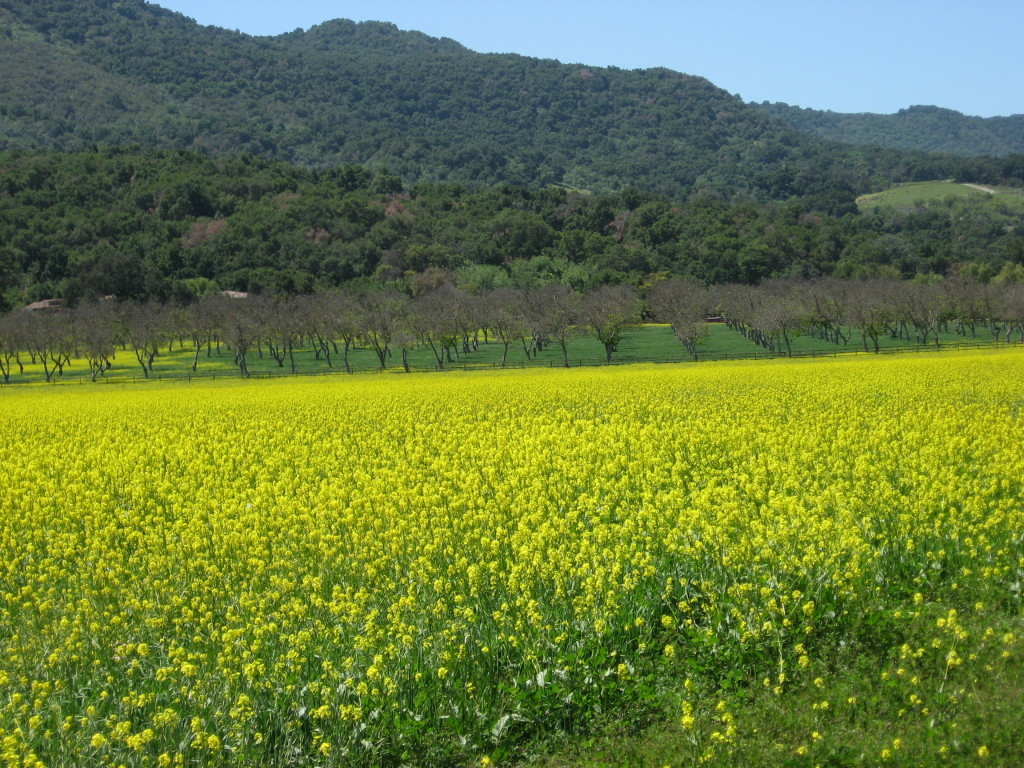
In upper Ojai, the Black Mountain Ranch is ablaze with color, shapes and forms. The mustard plants, orchard trees and Coast Live Oak trees form a stunning horticultural canvas.

Only 80 miles from our Glendale home, Ojai, nestled in the Los Padres National Forest, is a retreat from congested city life. Each year, we come in late April and join family and friends to watch “The Ojai” tennis tournament.

Ojai is a haven for artists, musicians and those seeking a healthy lifestyle. But lesser known is the oldest amateur tennis tournament in America (114 years) that’s played in this Mayberry-esque town. Tennis matches include PAC-12, community and independent college, junior competition, and open tennis play.

Tennis legends Billie Jean King, Arthur Ashe, Stan Smith, Tracy Austin and the Bryan brothers have all played here. Libbey Park, shaded by mighty oaks in the middle of town, hosts the major tennis action and dozens of courts all the way to Ventura are also used.

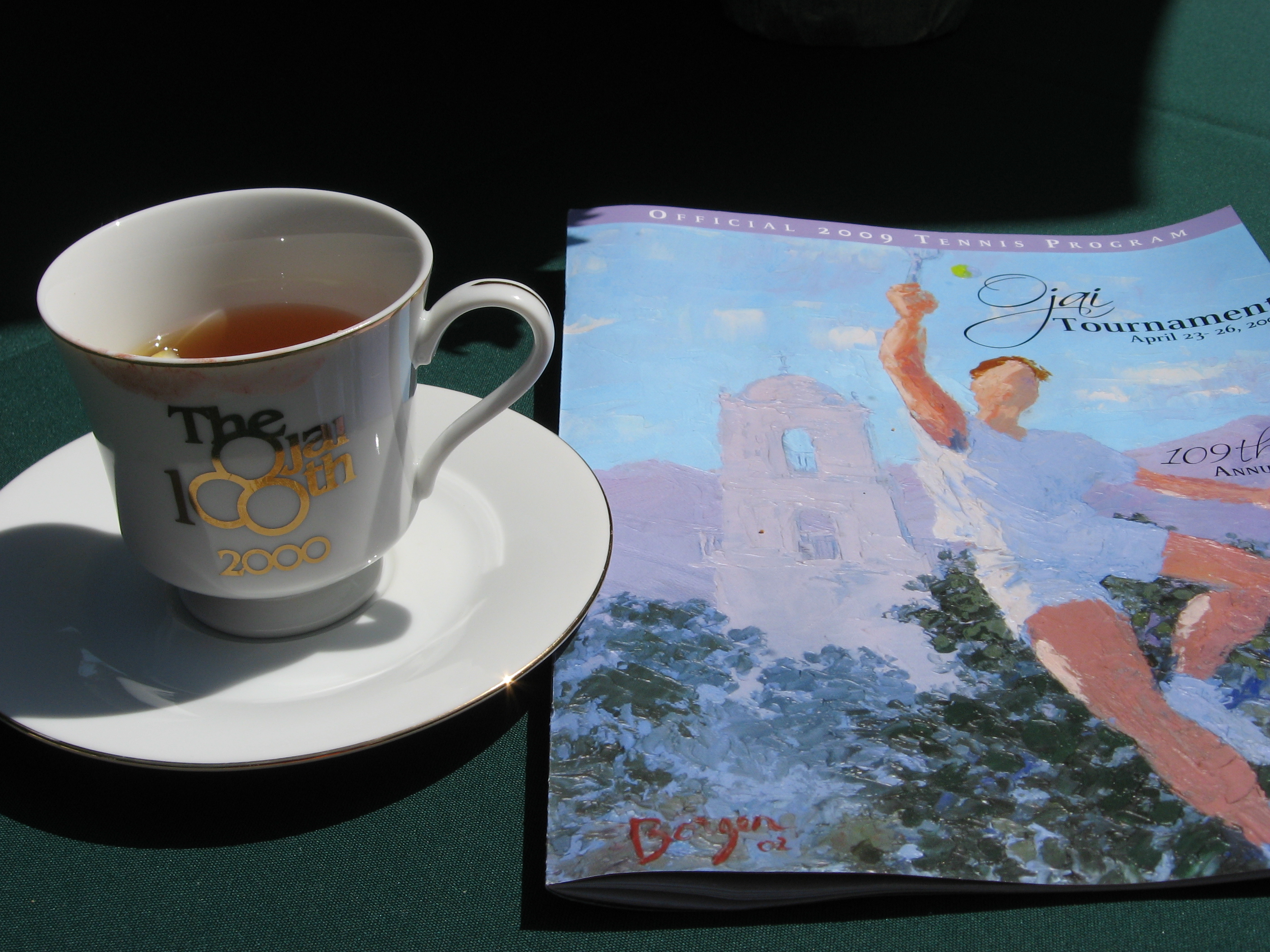
teatimeThis tournament is so steeped in tradition that the “Tea Tent” opens promptly at 3 p.m. Tea is poured into china cups from an elegant sterling server for all who stop in. One lump or two? A slice of lemon? Women adorned in floral dresses stand ready with platters loaded with Oreos, maple, lemon creme, shortcake, and chocolate chip cookies. Fans reconnect around outside tables and discuss their favorite plays of the day while sipping tea.

We love “The Ojai” and my memories of the years here don’t fade easily.  Nor do the back of my white slacks with the green tinge from the freshly painted bleachers at Libbey Park.

We’ll return next year, stay at the Lavender Inn’s cottage, take an early morning hike up Shelf Road Trail with Christy and PJ and then watch the matches, cheering for the winners and the runner-ups as they receive their green and white ribboned medals flanked amidst pots of yellow chrysanthemums.  And yes, I’ll wear white slacks again. After all, that’s part of the tradition too.


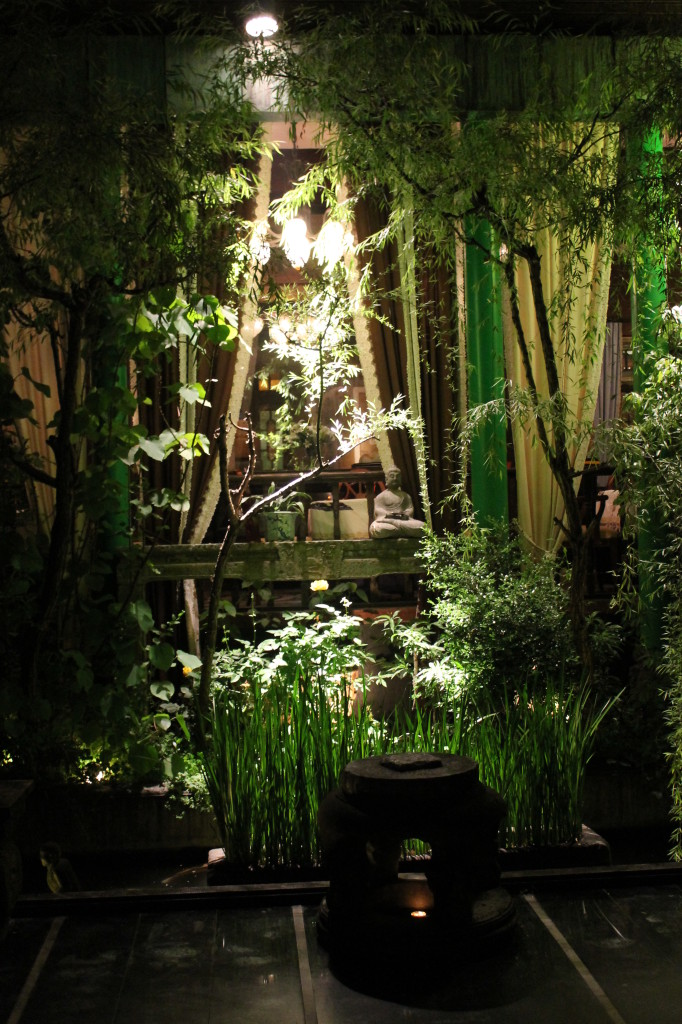
Exotic Gathering Spot

Yongfoo Elite Bar, Shanghai, China

Yongfoo Elite Bar, Shanghai, China. Photo by Carl Werts

Guest photographer Carl Werts has been a friend since our time at the Pasadena Athletic Club in the 1980’s.  He’s an avid mountaineer and has enjoyed rock, ice and high altitude alpine climbing in France, New Zealand, Bolivia, Mexico, and Nepal. He’s summited Mt. McKinley in Alaska and Ama Dablam in the Himalaya, capturing images along the way.

The balance, harmony, and light of this photograph caught my attention when I saw it hanging in Carl’s dental office. Intrigued, I wondered what mysteries lay behind those graceful curtains. Carl kindly agreed to share the photograph and its story with “Wondrous Nature”.

Two years ago, Carl travelled to Suqain, China with other dentists, doctors, and nurses to provide care to the poor, elderly, and infirmed. Besides providing humanitarian clinical care, they visited special needs schools providing donations, gifts, and toys. “Trips like these allow us to see and experience the world through a different lens while we share our skills with those less fortunate,” Carl said.

On the last night of the trip, Carl arranged to meet a patient who lived and worked in Shanghai and asked to see a part of the city that tourists might not normally see — that place was Yongfoo Elite bar.

This exotic bar, restaurant, place for meetings, weddings and other social gatherings is housed in an old consular residence on Yongfu Lu in the former French Concession. “Several little private gardens, guest houses and shrines are all tucked in around a sprawling estate, as exotically landscaped with décor as in this image,” said Carl. Yongfoo Elite is “tropical but not quite, hints of walls with old framing, the Buddha statue, the big barrel pot with light illuminating, the overall lighting and color.  To me just a very cool image.”

Carl began taking photos in high school with a new SLR camera. He resumed photography in dental school in Washington, D.C. During his mountaineering time, he became an avid photographer since so many people were interested in his photos of far off (and high up) places.

This “cool Image” was taken with a Canon EOS Rebel T3. Namaste, Carl!

Tiptoe through the Tulips

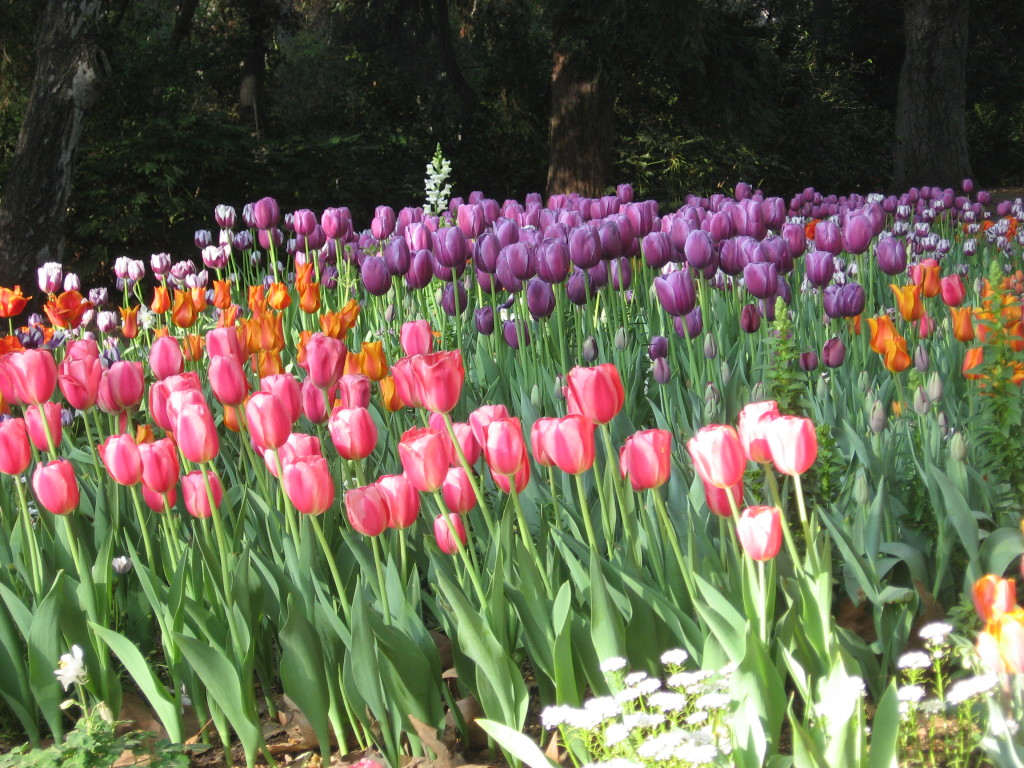
Tulips, Descanso Gardens, La Cañada, California

Tulips, Descanso Gardens, La Cañada, California

Spring arrived early in Southern California thanks to unseasonably high temperatures and the tulips unfurled their colorful pennants into full bloom at Descanso Gardens.  I often walk in the Gardens and am dazzled by the floral frenzy. Thousands of tulips blaze a patchwork of Purple Lord, Zurel, Orange Monarch and other bright colors along the walking paths.

I saw my first tulips in Pella, Iowa, a small city founded by a group of Dutch who immigrated to America for religious freedom in the mid-1800’s.  They brought their families, their belongings and, of course, their beloved tulips.  When we would visit grandma who had a farm in Knoxville, a favorite drive was to nearby Pella with its windmills, maypoles, and fields of tulips in the town square.

Although tulips are associated with the Netherlands, they actually originated in the mountainous regions of Central Asia. The sultan of the Ottoman Empire, Emperor Suleiman, grew tulips in his Constantinople gardens. The turban-shaped tulips so intrigued his Austrian ambassador that he sent bulbs and seeds to the Vienna Imperial Gardens in 1554.

Eventually, a Dutch botanic garden acquired tulips from Vienna in the late 1500’s. These new and beautiful flowers prompted a Dutch hybridizer and investor movement. Rare tulip type bulbs were sold for as much as 3,000 guilders a bulb, the equivalent today of $1,500. Many Dutch cashed in their families’ valuables to buy bulbs and enter the “tulipomania” trade. Huge sums of money were made, but in 1637 the tulip market crashed when buyers no longer would pay the exorbitant prices.

The Dutch steadily built a production and export business and the Netherlands now produce nine billion tulip bulbs annually, exporting seven billion.

Thanks to the Dutch, I can spend a leisurely hour strolling and watching magnificent tulips sway in the breeze on their long slender stalks. Oh — and did I mention the daffodils, cherry blossoms, lilacs, poppies, and wisteria?